A full re-roof on a Montclair-area house
Roof Replacement in Montclair, NJ
When is a roof past patching? Replacement in Montclair, NJ takes the old covering off, looks the boards over and lays a new roof, often after repairs have started to repeat. Your move: call (973) 358-8198 and describe the roof's age, its pitch and the last repair.
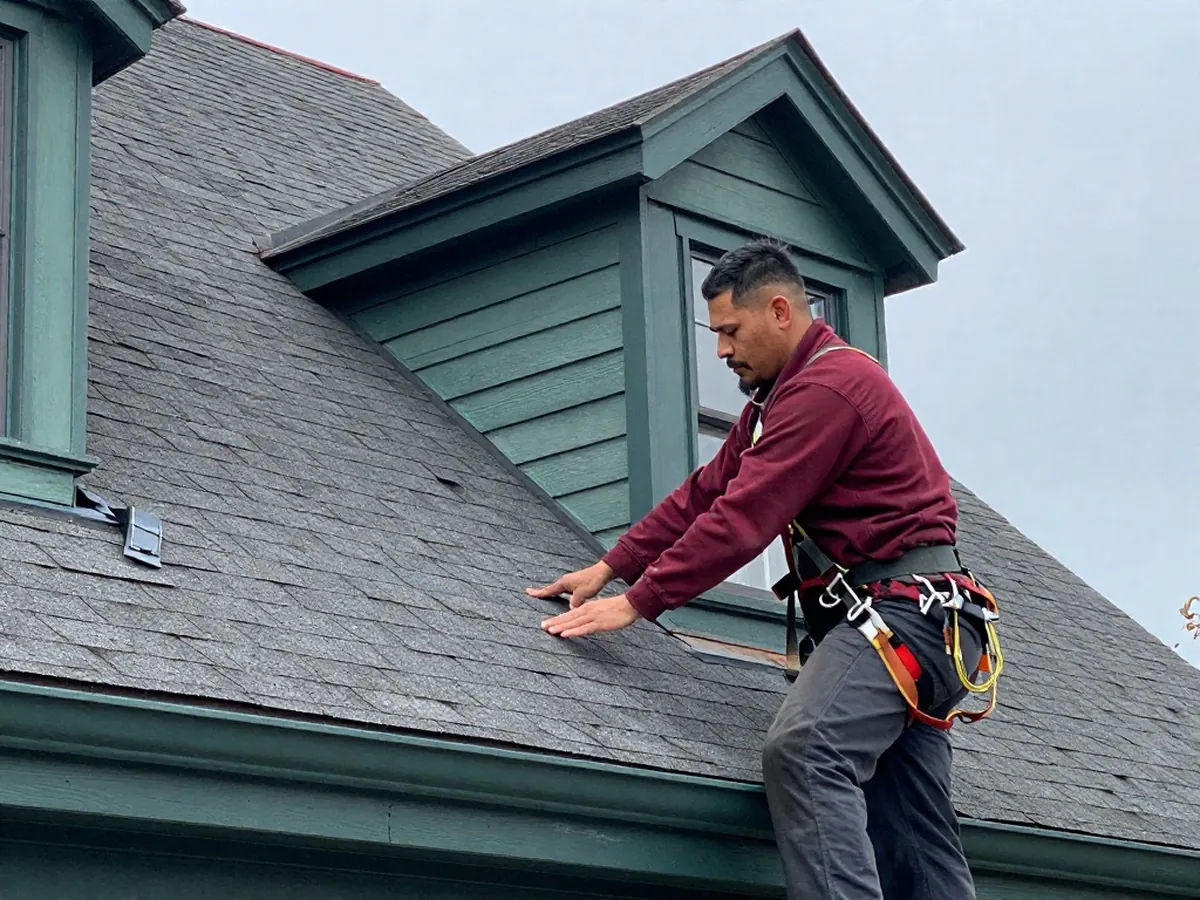
Stop and get safe if
- Water coming through a light fitting or socket: clear the room, touch nothing and call 911 from a dry spot.
- A ceiling sagging under the weight of water: keep people out from beneath it and call 911.
- A wire across the lawn or caught in a branch: treat it as live, keep 30 feet clear and let PSE&G's emergency line, 1-800-436-7734, or 911 deal with it.
- Bare boards exposed after wind stripped the shingles, with rain coming: do not climb up to cover them. Call 911 only if someone fell.
The order of a re-roof, layer by layer
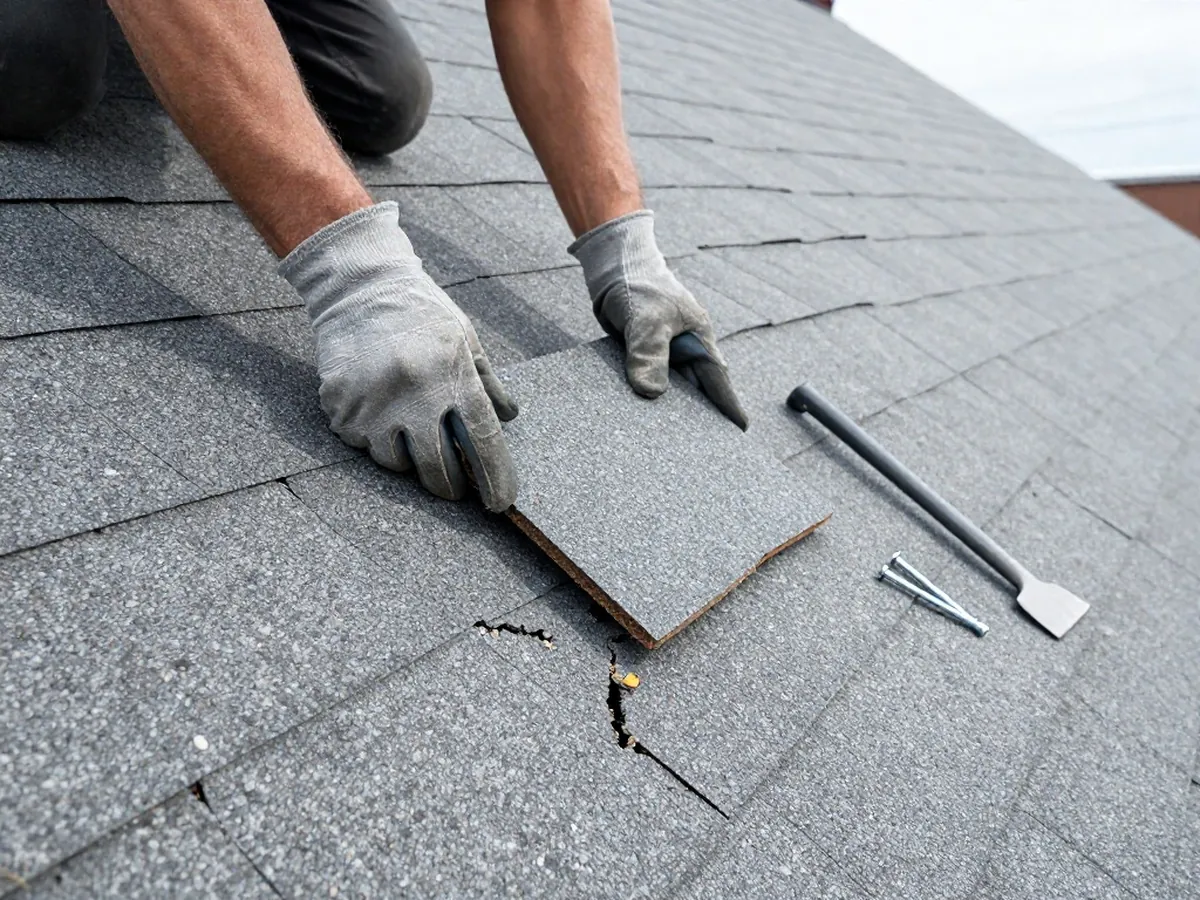
- Old shingles come off and the boards underneath are exposed. Soft or damaged panels are cut out and replaced. Underlayment goes down, then metal along the edges and in the valleys.
- Shingles start at the bottom edge with a starter strip, then climb row by row. FEMA's sheet counts six nails per starter shingle. Flashing is set at the chimney and walls as the rows reach them, and the ridge cap comes last.
- Cleanup closes the jobmagnets for nails, a walk of the yard, and the debris hauled away.
Where the trouble starts
- Shingles cracking, curling or going bald across whole slopes, not one patch
- Repairs that keep turning up in new places along the roof
- Roof boards gone soft or dark where leaks ran for years
- Storm damage spread across more than a tenth of the surface
- An underlayment and flashing set that wore out together
Short answers
- How urgent is a worn-out roof, by your number out of ten?
At 8 to 10 there is a wire down, a bulging ceiling or water at a fixture, so get everyone out and phone 911 or PSE&G. At 4 to 7 the roof leaks in more than one place or drops shingles in the yard after each wind; call (973) 358-8198 within the week. A 1 to 3 is an old roof that stays dry, and the work is collecting written proposals.
- What goes between the shingles and the roof boards?
Underlayment, a water-resistant sheet. The Department of Energy brief names one layer of 30-pound felt or two of 15-pound, and FEMA's high-wind sheet says always use it. Ask which one the proposal lists, and what lies beneath it.
- What happens to the boards under the old shingles?
The Energy Department brief says damaged sheathing is cut out and replaced with panels of the same thickness. Plywood or OSB that was not wet for long can stay, though it may peel as it dries. When the whole deck is redone, it suggests 5/8-inch panels held down with nails that have a ridged shank.
- Do old-house rules change a replacement?
They can. Glen Ridge's Historic Preservation Commission reviews any change of roof material, and the borough's guidelines call for like-for-like on slate and wood. Montclair requires a Certificate of Appropriateness for exterior changes that alter a property's look in its local historic districts and landmarks, while routine repair is exempt. Ask the town office before picking a material.
- Does a replacement call reach Clifton and Little Falls?
Yes. The contractor works across seven towns, and the pages for Clifton roofing and Little Falls roofing list each building office. Dial (973) 358-8198 from either one and describe the roof.
Old slope, new slope
The picture shows a roof half done: one slope stripped and relaid, the other still weathered. That contrast is useful for judging the old roof. Look at how bald and curled the weathered side is, and ask the roofer to point to the same signs on yours.
The image is a rendered scene, not a photo of a job, and it does not show any particular house.
On a visit
- Call (973) 358-8198 with the roof's age, how many layers you know of and what set this off; the contractor can then set up a look.
- Age and layers: how many courses of shingles are down and how worn the top one is.
- Roof boards: soft, dark or sagging patches that would need new panels.
- Edges, valleys, chimney and vent flashing, which tend to be replaced along with the shingles.
- Attic air paths: whether intake and ridge venting are open, since the Department of Energy brief favors baffled ridge vents.
- A written proposal naming materials and fasteners, plus the paperwork question for your type of house.
Before you sign a proposal, line these up
- Get the proposal in writing, with the materials and the fasteners named.
- Ask what happens to rotted boards, and how that is priced if the crew finds more than expected.
- Ask about underlayment and edge metal, not just the shingle brand.
- Ask who removes the old material and where it goes.
- Compare at least two written proposals against each other, line for line, not by the bottom number.
Re-roofing, paperwork and old-house rules
The state's Spring 2025 code newsletter says reroofing a one- or two-family house with no shared walls is ordinary maintenance, so no building permit. It does not speak to attached houses, and a job that reinstalls solar panels has its own electrical notes.
Old districts add a layer. Glen Ridge reviews a change of roof material, and Montclair's local historic districts and landmarks need a Certificate of Appropriateness for exterior changes. The town-by-town offices are on the rules page.
More roof jobs
Sources U.S. Department of Energy, Repairing Roofs and Ceilings technical brief (Jan 2006) FEMA, Asphalt Shingle Roofing for High Wind Regions, Technical Fact Sheet No. 7.3 (Dec 2010) NJ Department of Community Affairs, Significant changes to minor work and ordinary maintenance (5 Mar 2018) NJ Department of Community Affairs, Construction Code Communicator, Spring 2025 (Solar and Reroofing) Borough of Glen Ridge Historic Preservation Commission, Historic Design Guidelines (2021), roof section Borough of Glen Ridge, Historic Preservation Commission Township of Montclair, Certificate of Appropriateness
Describe the roof, then dial.
Before you call (973) 358-8198, find the street address, note which room shows water and jot down roughly how old the roof is. Tenants: the owner arranges roof work, so the landlord hears about it first. Towns: Montclair, Glen Ridge, Bloomfield, West Orange, Cedar Grove, Clifton, Little Falls.